środa, 6 lipca 2011

Miles Davis - Doo-Bop


Doo-Bop was jazz innovator Miles Davis' final studio album, which would have marked the beginning of the artist's turn to hip-hop-oriented tracks. However, Davis died on September 28, 1991, before the album was completed. Only six tunes for the album had been completed.[1] To finish off the album, producer Easy Mo Bee was asked to take some of the unreleased trumpet performances (stemming from what Davis called the RubberBand Session), and build tracks that Miles 'would have loved' around the recordings. The album's posthumous songs (as stated in the liner notes) are "High Speed Chase" and "Fantasy." A reprise of the song "Mystery" rounded out the album's nine-track length.

The project stemmed from Davis sitting in his New York apartment in the summer with the windows open, listening to the sound of the streets. He wanted to record an album of music that captured these sounds. In early 1991, Davis called up his friend Russell Simmons and asked him to find some young producers who could help create this kind of music, leading to Davis' collaboration with Easy Mo Bee. The result of this collaboration, Doo-Bop, was released by Warner Bros. Records on June 30, 1992, and received mixed reviews. The album won the 1993 Grammy Award for Best R&B Instrumental Performance

Dirty Dozen Brass Band-What's Going on


On August 29, the first anniversary of Hurricane Katrina, The Dirty Dozen Brass Band will release their reinterpretation of Marvin Gaye’s classic LP What’s Going On. Thirty-five years after its original release, the political and social themes of the album are just as relevant as ever. Along with many others along the Gulf Coast, the members of the Dirty Dozen Brass Band lost their homes to Katrina. Their take on What’s Going On is not only an attempt to express their feelings about this tragedy and other current events, but also a tribute to the spirit of their hometown of New Orleans.


środa, 22 czerwca 2011

The Stan Getz Quartet @ Chet Baker - Quintessence V2


Fans of Chet Baker know that the trumpeter and vocalist's career is divided into two distinctly different periods: His elegantly minimalist 1950s work where he helped define the "cool jazz" sound of the period, and his later efforts that were maddeningly inconsistent. This aural document from his later years--recorded in Oslo in 1983--falls into the latter category, and it's a decidedly mixed bag. Baker's voice is, sadly, far from in its top form, and his vocal performances here on standards like "Just Friends" and "But Not For Me" show him straining. Still, there are plenty of reasons to like this live recording. Stan Getz himself is in fine form throughout, his tenor saxophone tone still as rich and full-bodied as ever (especially on his gorgeous opening solo on "I'm Old Fashioned"), and his backing group (Jim McNeely on piano, George Mraz on bass and Victor Lewis on drums) swings superbly. Baker's trumpet playing was also in much finer form than his voice, and during his better moments here--as on his interplay with Getz on a lovely version of "Star Eyes"--a bit of his old self shines through.

Miles Davis - Blue Haze


Blue Haze is an album recorded in 1953 and 1954 by Miles Davis, for Prestige Records. The first track on the album is from the 3 April 1954 session which resulted in half of the album Walkin' (and was originally included on the 10" vinyl version of that album). The remainder is the result of two sessions on 19 May 1953 and 15 March 1954, the first being a quintet with John Lewis, Charles Mingus (on piano, not bass), Percy Heath and Max Roach, and the second a quartet with Horace Silver, Heath, and Art Blakey. Tracks 2 and 7 are wrongly credited as Davis compositions - they are both in fact by Eddie Vinson (see also Donna Lee for possible explanation of this). However, Vinson supposedly wrote these tunes for Davis, and this is probably how the confusion has occurred.

1.I'll Remember April D. Raye, G. DePaul and P. Johnston 7:52
2.Four M. Davis and E. Vinson 4:00
3.Old Devil Moon B. Lane and E.Y. Harburg 3:22
4.Smooch M. Davis and C. Mingus 3:04
5.Blue Haze M. Davis 6:08
6.When Lights are Low B. Carter and C. Williams 3:25
7.Tune Up M. Davis and E. Vinson 3:52
8.Miles Ahead M. Davis and G. Evans 4:28

niedziela, 19 czerwca 2011

John Coltrane - Black Pearls


Recorded in the late-1950s, the John Coltrane of BLACK PEARLS is not the shining, legendary beacon of free jazz he eventually became by the mid-'60s. At the time of PEARLS, Coltrane was a member of the Miles Davis Quintet, and this was one of his solo ventures. Like many Prestige discs of this period, it's a straight-ahead hard-bop jam session. Featuring sterling accompaniment by Red Garland (also then with Davis) on piano and Donald Byrd's crackling trumpet, PEARLS displays Coltrane's surging sheets-of-sound approach in full flower.

Recorded at the Van Gelder Studio, Hackensack, New Jersey on May 23, 1958. Originally released on Prestige

sobota, 18 czerwca 2011

Horace Silver - Doin' The Thing


Doin' the Thing is a live album by jazz pianist Horace Silver released on the Blue Note label in 1961 featuring performances by Silver with Blue Mitchell, Junior Cook, Gene Taylor, and Roy Brooks recorded at the Village Gate in New York City.

The Allmusic review by Scott Yanow awarded the album 4½ stars and states "This live set finds pianist/composer Horace Silver and his most acclaimed quintet stretching out". The All About Jazz review of the CD rerelease by Hrayr Attarian called the album "especially unique, not only because of its quality, but because it is the only live recording of his most famous quintet. Although it was recorded 45 years ago (1961), this CD has the power to transport one back in time to the smoky room at Village Gate where one feels the raw energy of the live performance"

Tomasz Stańko - Suspended Night

Tomasz Stańko - Suspended Night


It's entirely marvelous--and almost always unexpected--to encounter a first-class jazz performer moving from a position of prominence to one of absolute top rank. Without a doubt, that is what trumpeter Thomasz Stanko has accomplished on his latest release from ECM. Here he plays with a confidence and presence often glimpsed in his previous recordings but come fully to the fore on this transcendent disc.

As impressive as Stanko is (and he's mighty impressive!), the real heroes here are, perhaps, his Polish quintet. Especially standout are Marcin Wasilewski on piano and Slawomir Kurkiewicz on bass. Not far behind is Michal Miskiewicz on drums. These players consistently set the table for the exact right moods and atmospheres for Stanko, be it elegy ("Song for Sarah"), acquiescence ("Suspended Variation I"), friskiness ("Suspended Variation II," a spirited tango), romance ("Suspended Variation III," a gorgeous ballad), hope ("Suspended Variation IV," another gorgeous ballad), joi de vivre ("Suspended Variation V," the closest thing these guys come to an up-tempo number), mystery ("Suspended Variation VI," a meditation of the vagaries and vicissitudes of life), and so on. This proves, as much as any recent recording, the magic that comes from playing with a working jazz band

Once again, as we have come to expect from engineer Jon Erik Konshaug and producer Manfred Eicher, the sound is ravishingly beautiful--with exquisite detail, presence, and warmth. ECM at the absolute top of its game. Hard to beat.

Surely one of the most purely stunningly beautiful jazz discs ever recorded, Suspended Night instantly vaults trumpeter Stanko to the very front ranks of trumpeters in the history of jazz.

Tracklist

1. Song for Sarah [05:30]
2. Suspended Variations I [08:52]
3. Suspended Variations II [08:24]
4. Suspended Variations III [07:13]
5. Suspended Variations IV [07:04]
6. Suspended Variations V [04:20]
7. Suspended Variations VI [08:54]
8. Suspended Variations VII [03:25]
9. Suspended Variations VIII [04:21]
10. Suspended Variations IX [05:52]
11. Suspended Variations X [04:47]

Personnel:
Sławomir Kurkiewicz - double bass
Marcin Wasilewski - piano
Tomasz Stańko - trumpet
Michał Miśkiewicz - drums

Grant Green - Solid


Grant Green divides opinion. While many see him as a lesser player to the likes of Kenny Burrell or Wes Montgomery, there are those, like Michael Cuscuna (writing on the liner notes of "Solid") who see him as a thread linking Charlie Christian (the virtual inventor of hollow body jazz guitar) with great jazz guitarists of today such as Peter Bernstein and John Scofield. Grant Green was "a major link to... Charlie Christian..... he absorbed Christian, then bypassed such heroes of the day as Tal Farlow, Kenny Burrell and Wes Montgomery, and moved directly to the formation of his own identity."

Tracklist:

01 Minor League 7:05
02 Ezz-Thetic 10:41
03 Grant's Tune 7:00
04 Solid 7:23
05 The Kicker 6:23
06 Wives And Lovers 9:00

Personnel:
Grant Green (guitar);
James Spaulding (alto saxophone);
Joe Henderson (tenor saxophone);
McCoy Tyner (piano);
Bob Cranshaw (bass);
Elvin Jones (drums).

Miles Davis & Milt Jackson - Quintet & Sextet (1955)

Miles Davis & Milt Jackson - Quintet & Sextet (1955)


Lesser heralded than their collaboration with Monk (as documented on BAGS' GROOVE and MILES DAVIS AND THE MODERN JAZZ GIANTS), this August 5, 1955 session with vibraphonist Milt Jackson was Miles' last all-star collaboration before the formation of his first classic quintet. It marked a farewell to an older generation of acolytes and fellow travellers. Miles was entering a new era of leadership and international stardom, and generally he would only record with his working groups.

QUINTET/SEXTET is notable for two compositions by Jackie McLean: "Dr. Jackle" and "Minor March" (it appears on his famous 1959 Blue Note date NEW SOIL as "Minor Apprehension"). The former is a Charlie Parker-ish line featuring a masterful Milt Jackson symposium on the blues--Miles' typically lyric approach, a tart, spacious flight from McLean, and a soulful, dancing Ray Bryant. The latter is a mysterious minor figure with jabbing rhythm breaks and a joyous bridge that recalls "Tempus Fugit." McLean's vaulting cadences and fervent cry anti****te the rapture of his mature style, and Bryant takes a harmonically adventuresome solo.

Elsewhere the group digs into the Bud Powell-like changes of Ray Bryant's low, slow "Changes" (over the rock solid groove of Percy Heath and Art Taylor), and the quirky harmonies and angular melodies of Thad Jones' "Bitty Ditty." "Changes" inspires a lovely muted statement from Davis, and illustrates Bryant's unique blend of blues, sanctified gospel and bebop. Davis and Jackson combine for pungent voicings on the head to "Bitty Ditty," then demonstrate their elegant mastery of harmony and swing. Both are inspired by the shape of Jones' line, completely unfazed by its intricacies.

Tracklist:

01 Minor League 7:05
02 Ezz-Thetic 10:41
03 Grant's Tune 7:00
04 Solid 7:23
05 The Kicker 6:23
06 Wives And Lovers 9:00

Personnel:
Miles Davis ( trumpet )
Milt Jackson ( vibraphone )
Jackie McLean ( alto saxophone )
Ray Bryant ( piano )
Percy Heath ( bass )
Art Taylor ( drums )

Miles Davis - Seven Steps to Heaven (1963)


Opis:
"Seven Steps To Heaven" is one of those albums that you have to take in stride and listen to track by track and not so much as a cohesive album. Miles was in a state of flux in 1963. His quintet with Hank Mobley, Wynton Kelly, Paul Chambers, and Jimmy Cobb had been disbanded, and Miles had been recording with Gil Evans. When the time came for a new lp, Miles was still working on getting a steady group together. So, in fact, this lp is in fact 2 ep's, as 2 different groups play on this lp, each with a very different character from the other.

Group 1- Miles, George Coleman (tenor), Victor Feldman (piano), Ron Carter, (Bass), Frank Butler (dr) (tracks 1,3,5). This group is quite traditional in outlook, and the tracks played show this. Miles' beautifully heartfelt performances are backed perfctly by Feldman's supple and understated piano. This group proved that Miles could pack a wallop on the standards. The tenor of Coleman and Carter's bass compliment Miles and Feldman very well. As a fan of jazz, I very much enjoy what this very short lived quintet did (2 days in April 1963 was the life of this group).

Group 2- Miles, Coleman, Carter, Herbie Hancock, Tony Williams. 4/5 of what would be the 2nd great quintet are in action on tracks 2,4,6. The character of the band is immediatly felt on "Seven Steps to Heaven" (group 1 also recorded the song, as well as "So Near So Far"- track 4- and "Summer Nights", which landed on the "Quiet Nights" lp; perhaps at some point both takes of both of these songs will be on a remastered version of this lp to showcase the very different interpretations of the songs by the old and new guard), as Ron Carter's walking bass is pushed by Williams' drumming. Herbie Hancock's style is also apparent- a more open style as opposed to Feldman's more traditional block chord style.


This album definitely is an overlooked classic. The original versions of "Joshua" and the title track are worth the price of admission; "So Near, So Far" is absolutely beautiful. Add to that a chance to hear the underrated Victor Feldman on the ballad portion of the album (especially "I Fall in Love Too Easily"). But the greatest thing about this recording is the debut of what was the rhythm section to end all rhythm sections: even this early as a unit, Herbie Hancock, Ron Carter, and the late Tony Williams sound awesome.

Tracklist:

01 Basin Street Blues
02 Seven Steps to Heaven
03 I Fall in Love too Easily
04 So Near, So Far
05 Baby Won't You Please Come Home
06 Joshua

Personnel:
Miles Davis (trumpet);
George Coleman (tenor saxophone);
Victor Feldman, Herbie Hancock (piano);
Ron Carter (bass instrument);
Frank Butler, Tony Williams (drums).

środa, 16 marca 2011

John Zorn - Jamie Saft Trio - Astaroth - Book Of Angels


With Sanhedrin: Unreleased Studio Recordings 1994-1997, saxophonist/composer John Zorn put a period on what turns out to be but the first phase of his Masada project. His voluminous Masada songbook, first emerging in '94 with his quartet featuring trumpeter Dave Douglas, bassist Greg Cohen, and drummer Joey Baron, has gone on to a wide variety of interpretations, including solo guitar, piano/violin recital, string trio, and electric octet.
But when Zorn indicated in the liner notes to Sanhedrin that he had composed an entire second book of Masada music in an almost ridiculously short period of time, the question arose as to whether there was something new to be said, after over two hundred compositions in the first Masada songbook so vividly and completely explored the juncture of traditional Jewish music and a variety of improvising contexts. Based on the first recording of Masada Book Two material, Astaroth, Book of Angels, it's clear that Zorn's frenetic imagination has yet to run dry. In fact, there are a number of surprises about Astaroth that create high anti****tion for future Book Two releases.


the kilimanjaro darkjazz ensemble - the kilimanjaro darkjazz ensemble [2007]


The Kilimanjaro Darkjazz Ensemble - to właściwie duet z Holandii, Jason Kohnen i Gideon Kiers którzy zadebiutowali w 2006 roku w wytwórni Planet Mu.
Chcąc napisać kilka słów o tym krążku, słuchając go w tle, łapie się na tym, jak wiele emocji on we mnie wyzwala i tym samym jak niesamowitym materiałem częstują wyżej wymienieni panowie. Nie chcę, by zabrzmiało to jak anty-rekomendacja, w żadnym wypadku - jednak wypada mi ostrzec co niektórych, a właściwie przygotować przed pierwszym odsłuchem. Na początek więc - na pewno nie jest to płyta do relaksu, mi przynajmniej Niepokój obecny od początku do końca płyty nie pozwala na umysłowy odpoczynek. Nie znaczy to jednak, że któraś z kompozycji mnie męczy.
Niewinnie otwierający ,,The Nothing Changes'' z przewijającym się gitarowym riffem w filmowym stylu zdradza naturę albumu, na myśl przychodzą obrazy z pierwszych filmów grozy, którymi zresztą rzekomo panowie się inspirowali. Dalej natrafiam na prawdziwą ucztę - utwór ,,Pearls for Swine'' przybija mnie do łóżka - potężny, chaotyczny aby następnie stać się melodyjnym. Kolejne utwory na przemian równoważą i wzbudzają chaos. Pięknie multiinstrumentalne, jazzowe kompozycje całe utkane w eksperymenty i zabiegi elektroniczne. Projekt wyjątkowy, wydaje mi się, że z tą samą mocą co wzbudza huśtawkę nastrojów, tak samo wywołuje on skrajne opinie. Pozostaje pytanie, czy macie odwagę?

THE KILIMANJARO DARKJAZZ ENSEMBLE are a project which has always been tied to films. Films are luxurious because they dispose of all these boring, unimportant, and trivial parts of our lives. This allows them to fully control our sensations, to put us in a very specific mood. Joy and sadness are occasionally OK, endless joy or endless sadness are clinical. But there is one sensation which can be persistent and unconditionally bearable at the same time. In the absence of a better alternative, let's call it "the mood". The mood is what TKDE are aiming at. The mood.


Tomasz Stańko - Music For K


Back in 1970, when this disc was recorded, Tomasz Stanko, by now an internationally established and admired jazz personality, was already known as one of the very few convincing free-jazzmen. In his bold endeavours he was lucky to enjoy some understanding and sensitive partners. Earlier, in the sixties Stanko's experiences were both as a sideman and a leader. He cooperated with such greats as Krzysztof Komeda, Wlodzimierz Nahorny, Zbigniew Namyslowski, Andrzej Trzaskowski, Don Cherry and Albert Mangelsdorff, but his favourite partners were Janusz Muniak, Janusz Stefanski, Zbig Seifert and - a bit later - Bronislaw Suchanek. Tomasz Stanko Quintet flourished without personal changes for five years (1969-1973), scoring a big success during 1970 Jazz Jamboree.

Around that time, a year after untimely death of Krzysztof Komeda (1939-1969), the quintet recorded four pieces by Stanko, naming the LP after the main composition: Music for K", thus paying homage to the memory of deceased friend and expressing his emotional attitude toward his premature death. However, Stanko didn't attempt to relate here to Komeda's sound or style
and remains very much himself presenting his peculiar, personal way of shaping music, remote, on the surface only, from the structural clarity. His predilection toward spontaneous development of music, based on very few indispensable determinants, surprisingly dovetails here with the emotional content of such deeply felt numbers like "Cry" and "Music for K". It seems obvious that Stanko's free stems rather from Coltrane's last work and his shades of expression are rich and many.


poniedziałek, 7 marca 2011

Cinematic Orchestra - Live At The Royal Albert Hall


Live at the Royal Albert Hall is a live album by The Cinematic Orchestra, released in the UK on April 14, 2008 on Ninja Tune Records. The origi,al concert was performed on November 2, 2007 at The Royal Albert Hall in London.The Cinematic Orchestra is a British jazz and electronic outfit, created in the late 1990s by Jason Swinscoe. The band is signed to Ninja Tune independent record label. In addition to Swinscoe, the band includes PC (former DJ Food member Patrick Carpenter) on turntables, Luke Flowers (drums), Tom Chant (Saxophone), Nick Ramm (piano), Stuart McCallum (guitar) and Phil France (double bass). Former members include Jamie Coleman (trumpet), T. Daniel Howard (drums), Federico Ughi (drums) and Alex James (piano). The most recent addition to the band is Mancunian guitarist Stuart McCallum.


poniedziałek, 28 lutego 2011

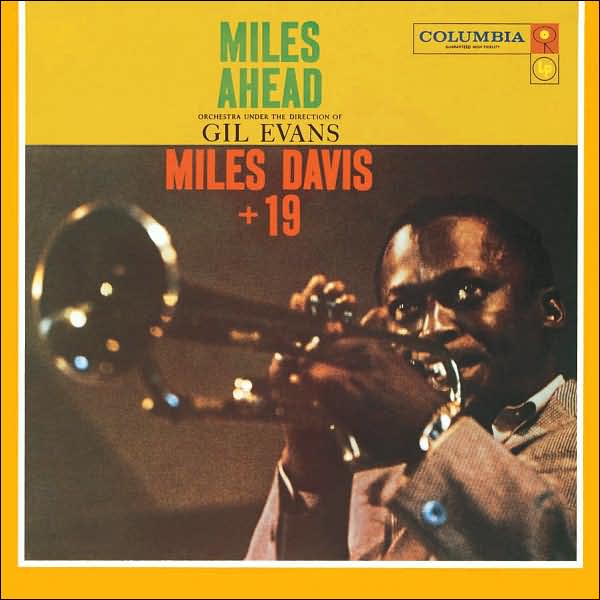
Miles Davis - Miles Ahead (1957)

[b]Miles Davis - Miles Ahead (1957)[/b]


Opis:
Album ten wyznacza drugi etap współpracy z Gilem Evansem. Pierwszy zaoowocował albumem Birth of the Cool. Do drugiego będą jeszcze należały Porgy and Bess i Sketches of Spain.

Jest to właściwie płyta koncepcyjna; 10 kompozycji tworzy jazzową suitę.

Album został nagrany na czterech sesjach. Jednak w trakcie postprodukcji Davis zadecydował o piątej sesji. Popoprawiał wszystkie pomyłki i opuszczenia w czasie jego solowych partii poprzez nałożenie "łat". Ponieważ nieoczekiwanie album był monofoniczny można te wstawki łatwiej wyłowić niż na poprawionym wydaniu stereofonicznym.

Na oryginalnym albumie nie był w ogóle wymieniony pianista Wynton Kelly, którego partia fortepianowa na alternatywnym "Springsville" znalazła się w "Springsville" wydanym na albumie.

Oryginalny album ukazał się z całkowicie niepasującą do płyty okładką przedstawiającą młodą białą kobietę na żaglówce[1]. Wszystkie późniejsze wydania miały już na okładce fotografię Milesa Davisa.


Tracklist:

1. Springsville (J. Carisi) [3:27]
2. The Maids of Cadiz (L. Delibes) [3:53]
3. The Duke (D. Brubeck) [3:35]
4. My Ship (I. Gershwin/K.Weill) [4:28]
5. Miles Ahead (M. Davis/G. Evans) [3:29]
6. Blues for Pablo (G. Evans) [5:18]
7. New Rhumba (A. Jamal) [4:37]
8. The Meaning of the Blues (R. Troup/L. Worth) [2:48]
9. Lament (J.J. Johnson) [2:15]
10. I Don't Wanna Be Kissed (by Anyone but You) (H. Spina/J. Elliott) [3:05]


Miles Ahead is a jazz album by Miles Davis that was released in 1957 under Columbia label as CL 1041. This was the first album following Birth of the Cool that Davis recorded with Gil Evans, with whom he would go on to release albums such as Porgy and Bess and Sketches of Spain. Gil Evans combined the ten pieces that make up the album in a kind of suite, each following the preceding one without interruption. Davis is the only soloist on Miles Ahead, which also features a prominent horn section.

A fifth recording date involved Davis alone (re-)recording material to cover or patch mistakes or omissions in his solos using overdubbing. The fact that this album originally was produced in mono makes these inserted over-dubbings rather obvious in the new stereo setting.


Nostalgia 77-The Garden

Nostalgia 77-The Garden


Upon first hearing The Garden, one may not feel inclined to acknowledge it as a "producer's" record. It feels quite different from Lamdin's 2004 scratch-inflicted debut Songs for My Funeral. The presence of metronome-perfect sequencing techniques (if they're even there at all) is incredibly subtle and often entirely unnoticeable. Clearly, Lamdin was not the lone creative force behind this effort. Rather than overwhelming production techniques, the buffet of musicianship present on The Garden makes the record. Horns, upright bass, live[?] drum set, keys, and electric guitar supply an ideal stripped down yet incredibly full sound.

The vacillation of The Garden can be somewhat disorienting, as one minute you'd swear you were hearing something off the latest off Ninja Tune, and a moment later, you'd be better off assuming it was vintage Blue Note. Its overall theme seems to shift slightly from piece to piece. Some songs are anchored in jazz-funk and fusion, some in Afrobeat, some in sample-derived hip-hop, and even a few in avant free jazz (minus the frenzied percussion). And though the musicianship throughout the album remains constant, no two songs sound particularly alike in style.

The Garden is 100% instrumental (vocal-free) with one exception: The White Stripes cover "Seven Nation Army" featuring vocals from blue-eyed UK soulstress Alice Russell. Ha! And you thought Joss Stone's "Fell in Love With a Boy" was the last of it! 'Fraid not. In any case, Lamdin's take on Jack and Meg is perhaps more tolerable than the latter mentioned. However, it does seem a tad out of place here since, after all, it's the only vocal track on the record and just so happens to be decidedly gimmicky.

Ben Lamdin’s creations range from heavy funk, to hip-hop based beats mixed with dusty old jazz, obscuro funk and psych bits and pieces.

Nostalgia 77 aka Ben Lamdin first burst onto the scene with his heavy, new funk based sound in 2002. In 2004 he moved away from the distinctive raw funk of his previous singles and he branched out to explore a more downtempo and jazz infused style. Nostalgia’s sound moved to hip-hop based beats fused with dusty old jazz; obscuro funk and psych bits and pieces, repolishing and rearranging them for modern day headphone junkies.


Tracklist:
1. Cheney Lane 4:40
2. Changes 5:56
3. Green Blades of Grass 3:30
4. The Hunger 7:29
5. You and Me 4:36
6. After Ararat 4:51
7. Freedom 5:17
8. Seven Nation Army 4:22
9. The Garden 3:19


Miles Davis - The Legendary Prestige Quintet Sessions

Miles Davis - The Legendary Prestige Quintet Sessions


Opis
By 1955, Miles Davis had been recording on the Prestige label for four years. But as his career began to gain momentum, getting a group together was an inevitable career decision. The Miles Davis Quintet consisted of Paul Chambers on bass, John Coltrane on tenor, Red Garland on the keys, Philly Joe Jones on the sticks and Miles on the trumpet. With this group, Miles had more than a steady performance group - he had a vehicle. In the space of about a year, the quintet recorded five full-length LPs - and that was just for Prestige. This was one of the busiest and most headlong periods for Miles Davis.

Let me first say that the music collected in The Legendary Prestige Sessions box set is infallible. The albums that these sessions spawned — namely The New Miles Davis Quintet, as well as the legendary 1956 quadriptych Relaxin', Steamin', Workin' and Cookin' — are among the finest I've heard in Miles' catalogue: these are the kind of songs that move you in a way only Jazz music can. Sure, it's not perfect, but it didn't have to be; Prestige wanted it hard and quick, and they got it that way. Far removed from Columbia's relaxed, multiple-session approach to album recording, or even the future extremes of Mingus' perfectionism and sophisticated techniques, the quintet recorded straight, with no retakes.

In fact, since these sessions were so quick and dirty, there are no alternate takes or unreleased numbers here; in that sense, the box set might seem perfunctory. What we have here is the music that comprised the original records on three CDs, plus one fourth disc exclusive to the box: it features radio and television broadcasts, as well as transcriptions of Miles' solos comprised of remastered live broadcasts.


Tracklist:

1. Stablemates 5:25
2. How Am I To Know? 4:41
3. S'posin' 5:17
4. When I Fall In Love 4:26
5. The Theme 2:01
6. Well, You Needn't 6:33
7. 'Round Midnight 5:26
8. Airegin 4:26
9. Oleo 6:33
10. Tune Up 4:25

czwartek, 24 lutego 2011

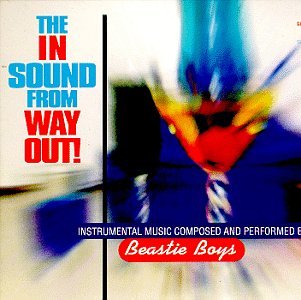
Beastie Boys-the in sound from way out


The In Sound from Way Out! is an instrumental compilation by the Beastie Boys, released in 1996. The title and cover art concept were borrowed from the Perrey and Kingsley album of the same name.Great instrumental album of some of the beastie boys tracks. Very jazzy live sounds and a great mood. Take a glass of wine, relax and listen to this - essential.


środa, 16 lutego 2011

New York Ska Jazz Ensemble - Get This (1998)


The New York Ska-Jazz Ensemble is exactly what its name suggests: a group of New York ska musicians dedicated to exploring the links between ska and jazz. The membership is all culled from top New York ska acts, making it something of a supergroup: leaders "Rocksteady" Freddie Reiter (saxophone, vocals) and Rick Faulkner (trombone, vocals) hail from the Toasters, as does drummer/lead vocalist Jonathan McCain, guitarist Devon James comes from the legendary Skatalites, and bassist Victor Rice and keyboardist Cary Brown play full-time with the Scofflaws.The album is a near even mix of original and ska-styled jazz standards like the Steve Cropper-penned "See Saw," Les Brown's "Comes Love" (both featuring Checkered Cabs vocalist Caz Gardner), Duke Ellington's "Mood Indigo," and more. Jack Ruby Jr. (the Toasters) gives reggae vocal treatment to three of the 14 cuts. The resultant two-tone jazz gives off a subtropical hedonist charm, conjuring up the contrasting images of Jamaican beaches and jazz club nightlife. Trombone and sax are the mainstays of the NYSJE horn section with occasional flute and Nathan Breedlove guesting on trumpet for three tracks. Stand-up bass completes a jumping equation that leads in science more toward straight-ahead jazz and in spirit more toward lively, infectious ska.

niedziela, 13 lutego 2011

The Skatalites - Greetings from Skamania (1996)


GREETINGS FROM SKAMANIA was nominated for a 1997 Grammy Award for Best Reggae Album.

1996's GREETINGS FROM SKAMANIA continues the winning streak of the reunited Skatalites, and also sets something of a band record; the group had stayed together for more than three years straight, the longest any incarnation of the Skatalites had ever lasted! This album builds on the ideas of its predecessor, 1994's HI-BOP SKA, without the free-jazz squalling of that album's guest star, Lester Bowie. Continuing with the ska-jazz fusion of the previous album, GREETINGS FROM SKAMANIA is half brand-new band originals and half reworkings of classic ska tunes of the '60s. Most of those old favorites are adapted into extended jazzy solo showcases, like the eight-minute "El Pussycat" and a fantastic six-minute version of the classic "Phoenix City." Of the new material, the slinky "Have A Good Time" is the highlight, featuring vocals from part-time Skatalite Doreen Schaffer.
Recorded at The Loft, Bronxville, New York.